


Internal Medicine

Take-home points:
- Looked at 35 cats with FIP; 25/35 cats had thoracic radiographic changes
- The most common thoracic radiographic abnormality was an unstructured interstitial pattern
- Bronchial, alveolar or a combination of airway patterns were also seen
- Pleural effusion (unilateral or bilateral) was also seen
- If you see thoracic radiographic changes in any sick cat that fits the signalment, think about FIP
- Normal thoracic radiographs don’t rule out FIP – 9% of confirmed cases had normal chest X-rays
Dermatology
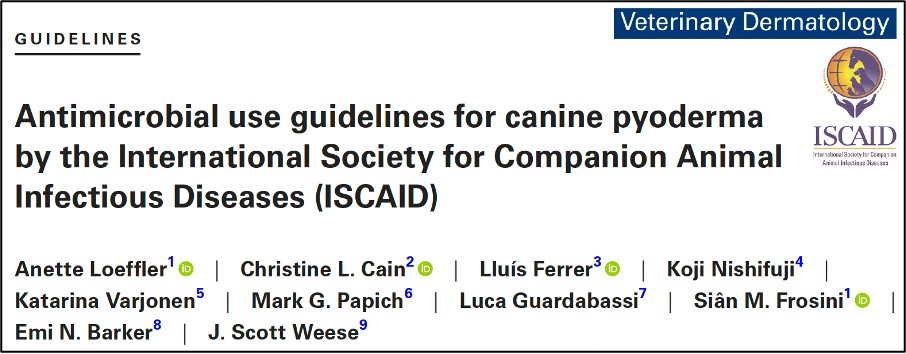
Take-home points:
- These most recent guidelines for management of pyoderma recommend topical antiseptic therapy (which does not select for resistant strains) for all forms of bacterial skin infection, barring only deep pyoderma
- Pyoderma only needs to be treated until cytological cure, no need to extend beyond this anymore
- Recommended systemic treatment durations are 2 weeks for superficial and 3 weeks for deep, with mandatory re-examination
- The underlying cause of the secondary infection (and it’s always secondary) must be identified and managed appropriately to prevent recurrence
Surgery

Take-home points:
- Dogs with surgical thoracolumbar disc disease with intact nociception carry an excellent prognosis with surgery
- While the prognosis for grade-matched conservatively managed dogs can be good, success rates, rates of recovery and chance of recurrence are more likely to be improved with surgical management, which is therefore recommended for these dogs
- Recovery can take weeks to months. Most improvement happens in the first 6–12 weeks, but some dogs continue improving for up to 6 months
- If placing a urinary catheter, avoid prophylactic antibiotics in these cases
- French Bulldogs have a reported higher risk of developing progressive myelomalacia
Oncology

Take-home points:
- Radiation therapy helps. Dogs with incompletely or narrowly excised soft tissue sarcomas who received definitive-intent fractionated radiation therapy after surgery experienced a median of almost three years without regrowth – double that of dogs treated with surgery alone
- This benefit was observed even when tumour grade was low
- The likelihood of local progression was over 3x more likely if metastasis was also present
- Importantly, this applied to conventional radiation protocols (small doses delivered over 15–20 treatments), not stereotactic or palliative protocols (high doses, fewer treatments)
- The large majority of dogs experienced some sort of radiation side effect (such as radiation dermatitis), but most were manageable
Emergency

Take-home points:
- High-dose adrenaline (0.1 mg/kg) is no longer recommended; when adrenaline is used, doses of 0.01 mg/kg are recommended
- If atropine is used, administer once early in the CPR effort and do not repeat
- Use a chest compression rate of 100–120 compressions per minute during CPR in dogs and cats
- Cycles of chest compressions delivered by an individual rescuer should not extend beyond 2 minutes
- Minimise pauses between compression cycles (<10 s) in dogs and cats during CPR
- To assess compression quality, aim for an ETCO₂ ≥18 mmHg on capnograph
- In animals in which IV or intraosseous access is not possible, the intra-tracheal route for adrenaline or atropine may be considered